
After-Repair Value (ARV): The Most Important Number in Fix-and-Flip Lending
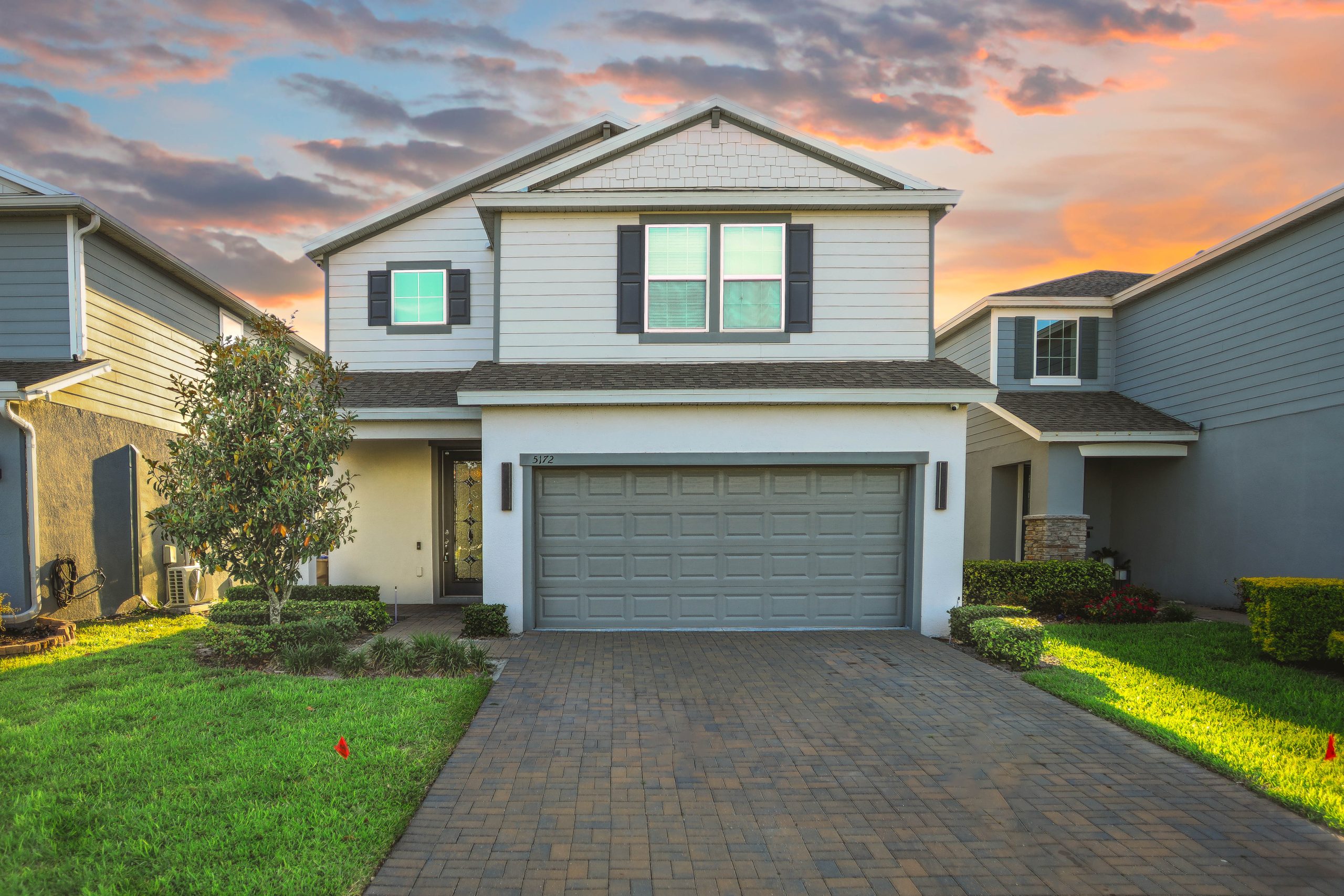
In a fix-and-flip loan, the lender is making a bet on a property’s future value — not its current condition. A distressed house worth $270,000 today might be worth $490,000 after a $130,000 renovation. The lender’s entire loan sizing decision rests on the accuracy of that $490,000 estimate.
That number — the after-repair value — is the most consequential single variable in residential bridge lending. Get it right and the loan structures with adequate cushion. Get it wrong by 15%, and the lender’s first-position security may not fully cover the loan balance at foreclosure. This is why ARV underwriting is where the quality of fix-and-flip lending is really determined.
What ARV Is – and What It Isn’t
What is after-repair value in real estate lending?
ARV is the projected market value of a property after the planned renovation is complete, in its finished condition. Three things it is not:
It is not purchase price plus renovation cost. That’s a cost-based estimate that ignores market demand entirely. A property that costs $400,000 to acquire and renovate is worth what the market will pay for it — which may be more, less, or exactly that number, depending on the submarket.
It is not a current appraisal. The property’s distressed as-is value is a different figure from ARV. Confusing the two is how borrowers sometimes justify overpaying for a distressed asset.
It is not optimism. ARV is a forward-looking market value estimate grounded in what similar, already-renovated comparable properties have actually sold for. Opinion without verifiable transaction data isn’t ARV — it’s a number.
How property appraisals work in private real estate lending covers the appraisal methodology framework that ARV estimates rely on — specifically the comparable sales approach and what distinguishes reliable comps from weak ones.
How ARV Is Calculated: The Comparable Sales Method
How do appraisers and lenders calculate after-repair value?
ARV is determined by analyzing comparable sales — “comps” — of properties similar in size, age, location, and quality level to what the subject property will look like after renovation. The process:
- Identify three to six sales of similar renovated properties within 0.5–1 mile of the subject, sold within the past three to six months
- Adjust each comp for differences in square footage (using price per square foot), bedroom and bathroom count, garage, lot size, and condition
- Average the adjusted sale prices to produce the ARV estimate
Each adjustment is a judgment call — which is why experienced appraisers and disciplined lenders sometimes arrive at different ARV conclusions from the same data set. The methodology is standardized; the inputs are not.
One California and Texas-specific error worth naming: In active markets, appraisers and borrowers sometimes use pending sales or active listings as comp references. These aren’t closed transactions — they’re aspirational prices, and in a softening market they can significantly overstate what the property will actually sell for. ARV must be grounded in closed, recorded sales. Pending and active listings are useful for context but not for value anchoring.
The Critical Importance of Renovated Comparables
Why does the type of comparable sale matter so much for ARV accuracy?
The most common ARV error is using the wrong category of comparable. Each type of sale captures a different market segment with different buyer behavior:
Distressed property sales — sold as-is or with known condition issues — understate ARV because they price in the discount buyers demand for unknown renovation risk. Using an as-is sale as a comp for a finished renovation property will undervalue the ARV.
New construction — overstates ARV because it reflects the premium buyers pay for warranties, modern layouts, and new systems. A typical flip renovation cannot replicate the quality premium of new construction.
Luxury renovations — in a submarket where the median buyer can’t afford luxury finishes, the premium paid for high-end renovation doesn’t transfer to comparable properties in a lower price tier.
The correct comp is specifically: a property that was purchased in distressed or below-market condition, renovated to a standard comparable to the planned renovation, and sold to a retail buyer through the MLS. Finding three to six of these in the right geographic and time window requires genuine market knowledge — and discipline not to settle for weaker comps when perfect ones don’t exist.
Finding none? That’s information too: it may mean the subject property’s planned renovation standard exceeds what buyers in that specific area are paying for.
How Lenders Use ARV to Size Loans
How does a private lender use ARV to determine the maximum loan amount?
Most private lenders for residential fix-and-flip apply a maximum loan-to-ARV ratio of 70–75%. The calculation:
ARV × maximum LTV ratio = maximum loan amount
On a property with a $490,000 ARV at a 70% cap:
Maximum loan = $490,000 × 70% = $343,000
This loan is typically structured in two components — an acquisition component funded at closing and a renovation holdback released in draws as work is completed:
- Acquisition component: $270,000 (funded at closing)
- Renovation holdback: $73,000 (released in staged draws)
- Total: $343,000
The total funded amount never exceeds the ARV-based maximum, ensuring the lender’s position stays at or below 70% of the property’s completed value throughout the construction phase — not just at origination.
The full fix-and-flip loan explainer covers how the draw structure works in practice, including the inspection process before each draw release and what happens when an inspection reveals incomplete work.
For a deeper comparison of ARV alongside LTV and LTC as underwriting metrics, LTV, LTC, and ARV — understanding the differences covers how these three ratios interact and which constraint governs in different loan scenarios.
The Most Common ARV Errors — and Their Consequences
What are the most common mistakes in ARV estimation that cost lenders money?
Beyond the comp-type error covered above, five specific patterns consistently produce inaccurate ARV estimates:
Geographic cherry-picking. Using a comp from a better street, block, or neighborhood than the subject property. A sale two streets over in a more desirable location captures a location premium the subject can’t replicate. ARV comps must be from genuinely comparable micro-locations, not just the same zip code.
Time lag errors. Using a sale from 12 months ago in a market that has since shifted. In a market where values have softened 8% over the past year, a 12-month-old comp overstates ARV by that same margin before any other adjustments. Comps older than six months require an explicit time adjustment — not just an acknowledgment that they’re a little old.
Quality mismatch. Comparing a full gut renovation — new kitchen, baths, flooring, roof, HVAC — to a light cosmetic update involving new paint and fixtures. The finished quality level is a primary driver of sale price at the retail level, and overestimating finish quality produces inflated ARV.
Over-improvement. Projecting renovation finishes — quartz countertops, spa-grade bathrooms, smart home systems — that buyers in the subject neighborhood won’t pay a meaningful premium for. The ARV ceiling in any submarket is set by what buyers in that price tier will pay, not by what materials cost.
The consequence arithmetic: An ARV estimate that is 10% too high on the $490,000 property inflates the estimated value to $539,000. At 70% LTV, the loan would be sized at $377,300 instead of $343,000 — a $34,300 difference. That $34,300 is the amount by which the lender’s position exceeds what conservative underwriting would have allowed. If the property sells at the true $490,000, the lender recovers fine. If it sells at a distressed discount, that $34,300 is where the loss begins.
Who Produces the ARV — and How Lenders Verify It
Who determines the ARV on a fix-and-flip loan and how is it independently verified?
In a private bridge loan application, the borrower typically provides an initial ARV estimate supported by their own comp analysis. The lender then orders an independent appraisal from a state-licensed appraiser — often holding the MAI designation from the Appraisal Institute, which is a professional credential earned on top of state licensing rather than an alternative to it — who inspects the property and reviews the planned scope of work. The appraiser produces an “as-improved” value as part of their standard engagement.
A clarification on validation methods by loan size: for loans under $500,000, some lenders use faster valuation approaches — desktop models with a field inspection component. This is faster and cheaper but meaningfully less reliable, particularly in thin or volatile submarkets where comparable data is limited. The previous appraisal article in this series notes that automated valuation models and broker price opinions carry less reliability than full independent appraisals for origination purposes — that caution applies here too. Speed and cost savings in ARV validation are false economies if the resulting loan is sized against an inaccurate number.
For loans above $1 million or in complex markets, a full independent appraisal is standard and should be required. The lender’s internal underwriter then reviews the appraisal for methodological soundness — specifically: are the comps truly renovated comparable properties? Are the adjustments directionally appropriate? Is the appraiser local with demonstrable knowledge of the submarket?
Calculating ARV and its role in real estate provides additional context on the borrower-side ARV calculation process — how experienced investors estimate ARV before engaging a lender.
ARV in a Shifting Market: Why Conservative Estimates Matter
How should lenders adjust ARV estimates for market timing risk on longer renovation projects?
A fix-and-flip loan with a 6–12 month renovation timeline carries inherent market timing risk: the sale happens in a future market, not today’s. The ARV established at origination may not match market conditions at the time of sale.
Consider the baseline example. Comparable sales today support a $490,000 ARV. Over the next 9 months, rising inventory in the submarket, higher mortgage rates reducing retail buyer purchasing power, or seasonal demand shifts reduce values by 8%. The actual sale price: $451,000.
On the original $343,000 loan at 70% ARV, the lender’s position at the actual sale price is $343,000 ÷ $451,000 = 76% — still covered, but with meaningfully reduced cushion.
A conservative underwriter applies a market discount of 5–10% to their ARV estimate for projects with timelines extending beyond six months, providing a buffer against this timing risk. On the $490,000 ARV, a 7% discount produces an underwriting ARV of $455,700 and a maximum loan of $319,000. That’s a more conservative loan — but one where an 8% market softening produces a lender position of $319,000 ÷ $451,000 = 70.7%. The cushion is preserved.
The percentage discount isn’t a fixed rule — it should be calibrated to the market. In a strongly appreciating market, 5% may be excessive. In a market showing softening signals (rising days on market, increasing price reductions, supply overhang), 10% may not be enough. The point is that the discount should be applied deliberately based on current market conditions, not omitted because today’s comps support the borrower’s number.
Bottom Line
ARV is the number the entire fix-and-flip loan rests on. Accurate ARV produces adequate collateral cushion. Inflated ARV produces a loan that looks fine until something goes wrong — and then the lender’s first-lien position doesn’t fully cover what it was supposed to.
Disciplined ARV underwriting requires the right type of comps (renovated retail sales, not distressed or luxury), geographic precision (not cherry-picked from better areas), temporal accuracy (not stale data in a shifting market), quality honesty (what this renovation will actually produce), and a market timing discount for longer projects. Each of these is a judgment call. The quality of those judgments, made consistently across hundreds of loans, is what separates a fund with real collateral protection from one that believes its numbers without verifying them.
Latest posts
Blog page
The Accredited Investor’s Guide to Reading a Private Placement Memorandum (PPM)
A Private Placement Memorandum can run 80 to 150 pages, and no one reads every word with equal care. That’s fine — but a handful of sections carry real legal and financial weight, and skipping them means taking on risk you never actually agreed to understand. This guide points to exactly where to focus, what […]

California Foreclosure Law Explained: What It Means for Private Real Estate Lenders
California’s foreclosure law is one of the most significant protections in a private lender’s toolkit — and one of the least understood by investors. The state’s non-judicial foreclosure process gives first-lien lenders a comparatively fast, cost-effective path to collateral recovery when a borrower defaults. For anyone invested in a California-focused fund like LBC Capital, understanding […]