
What Is a Fix-and-Flip Loan — and How Do Private Lenders Fund These Projects?
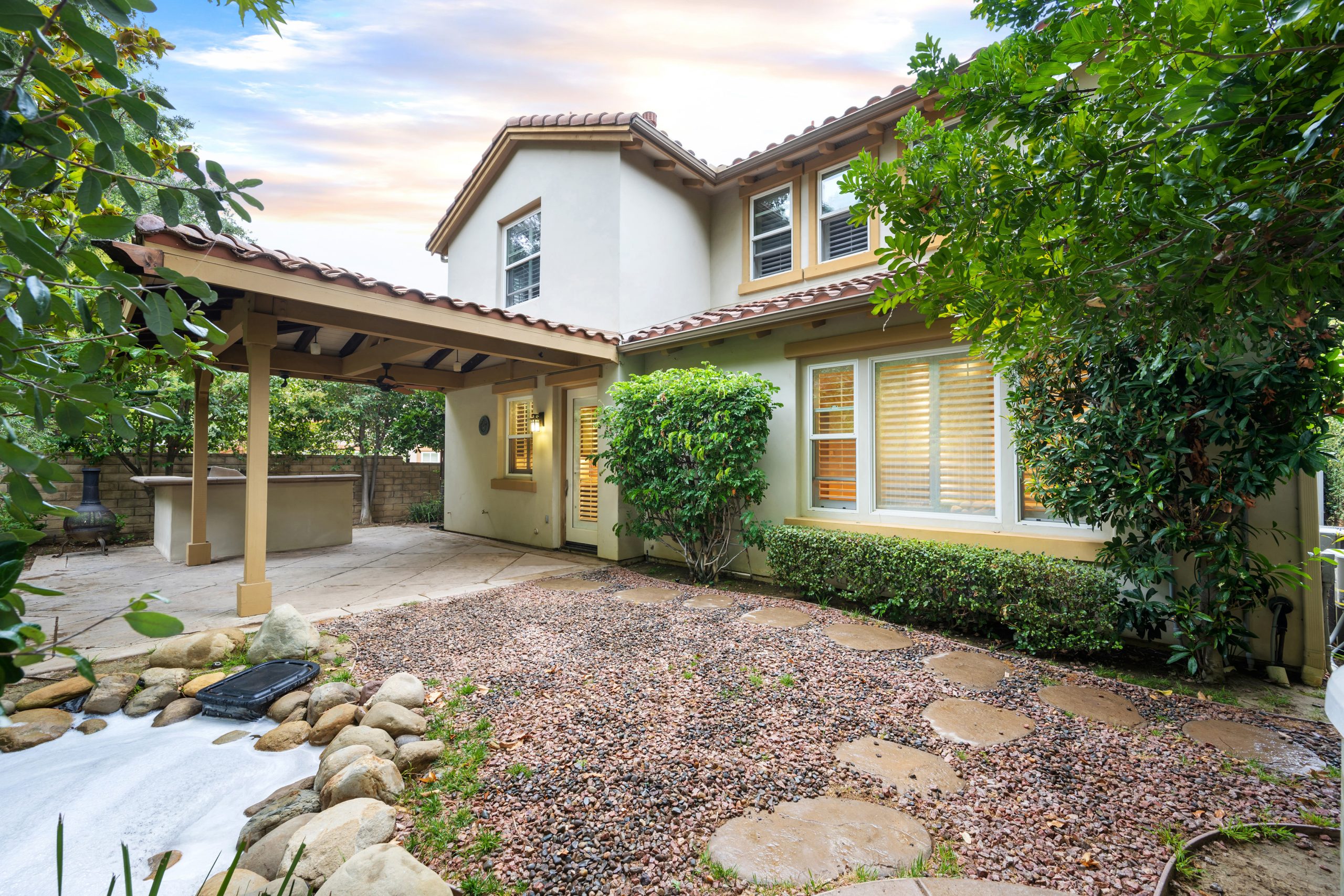
Every renovation show has a financing component the cameras rarely cover. Between the “before” walkthrough and the “after” listing, a private lender advanced hundreds of thousands of dollars against a property that was — at the time of funding — not yet worth what the loan required.
That calculated risk, executed with discipline and backed by experience, is how fix-and-flip lending works. For investors in private lending funds, this product represents a core component of many portfolios: short-duration, income-generating loans backed by residential collateral with the broadest buyer pool of any property type.
What Is a Fix-and-Flip Project?
How does a fix-and-flip real estate investment work?
A fix-and-flip project is a real estate investment strategy where an investor purchases a distressed or below-market property, renovates it to market standard or above, and sells it at a profit.
The investment thesis is simple: buy low (distressed price), add value (renovation), sell high (improved market value). The timeline runs typically 3–12 months from purchase to sale close.
Profitability depends on accurately assessing three variables simultaneously:
- Acquisition price — what was paid for the distressed property
- Renovation cost — total hard and soft costs to complete the project
- After-repair value (ARV) — the estimated market value once renovation is complete
Errors in any of these three compress or eliminate the profit margin. The margin for error is smaller than it looks in most deals — which is why experienced borrowers with multiple completed projects carry meaningfully less risk than first-time flippers, and why lenders price that experience differential directly into rate and LTV.
Why Fix-and-Flip Borrowers Need Private Lenders
Why can’t fix-and-flip investors use conventional mortgage financing?
Conventional mortgage lenders — Fannie Mae, FHA, banks — won’t fund distressed properties. A house with no functioning kitchen, significant deferred maintenance, or structural issues won’t pass the property condition requirements for agency financing. These lenders are designed for stabilized, move-in-ready collateral.
Fix-and-flip investors need three things that conventional lenders can’t provide:
Speed. Distressed properties in competitive markets — foreclosures, probate sales, off-market deals — require closing in 7–14 days. Sellers of distressed properties prioritize certainty over price; a buyer who can close in 10 days beats a higher offer contingent on 60-day bank financing.
Willingness to lend on distressed collateral. The property’s value at purchase is often significantly below what it will be worth after renovation. Private lenders underwrite to ARV — the future value — not the current distressed condition.
Renovation funding. Fix-and-flip investors need the renovation budget funded, not just the purchase price. Private lenders provide this through a holdback structure released in stages as work is completed. Trust deed investing — the legal structure underlying these loans in California — provides the collateral framework that makes private lenders comfortable advancing against properties in transition.
How a Fix-and-Flip Loan Is Structured
How is a fix-and-flip loan structured by a private lender?
A fix-and-flip loan has two components that together constitute the total loan amount:
Component 1 — Purchase loan. Typically 70–75% of the acquisition price, funded at closing. The borrower brings the remainder as a down payment.
Component 2 — Renovation holdback. Funds reserved for the renovation budget, held by the lender and released in stages as work is completed and inspected. Not advanced at closing.
The total combined loan amount is constrained by the ARV limit: typically 70–75% of the after-repair value. This constraint is the primary investor protection — the lender is underwriting to the property’s completed value, not its distressed purchase price.
Standard terms: 6–12 months, interest-only. Rates: 9–12% depending on borrower experience, loan size, and market. According to MBA research on residential bridge lending, fix-and-flip loans account for a growing share of private residential lending volume — consistent with the Census Bureau’s residential construction and renovation data showing sustained demand for housing stock improvement in markets with aging inventory.
A Concrete Example — With All the Numbers
What does a fix-and-flip loan look like in a real transaction?
Property: Distressed single-family residence in suburban Los Angeles, acquired for $340,000.
Renovation budget: $95,000.
ARV (estimated market value post-renovation): $620,000.
Loan sizing:
Maximum loan at 70% ARV: $620,000 × 70% = $434,000.
Purchase component: $340,000 (funded at closing).
Renovation holdback: $94,000 (released in draws as work is completed).
Interest cost — calculated correctly:
The $94,000 holdback isn’t drawn on day one — it’s released in stages over the renovation period. Assuming draws are taken evenly over 6 months, the average outstanding balance is approximately $387,000 ($340,000 + ~$47,000 average holdback drawn).
Interest on $340,000 for 8 months at 10%: $22,667.
Interest on $94,000 holdback drawn progressively over months 2–7: approximately $3,917.
Total estimated interest cost: ~$26,600.
Realistic profit calculation:
Sale price at ARV: $620,000.
Loan repayment: $434,000.
Interest cost: $26,600.
Agent commissions (5.5% of sale): $34,100.
Property taxes, insurance, utilities during hold (8 months): ~$8,000.
Estimated net profit: approximately $117,300.
The $117,300 represents a strong return on the borrower’s out-of-pocket capital — approximately $1,000 down payment ($340,000 purchase − $340,000 loan) plus the renovation draws as they’re advanced. But it requires the ARV estimate to hold, the renovation to come in on budget, and the property to sell within the projected timeline. Each assumption carries real risk that compresses the margin when it doesn’t hold.
How the Draw Process Works — and Why It Matters for Investors
How does the renovation draw process work in a fix-and-flip loan?
The renovation holdback is released in stages through a structured draw process. A typical 3–5 draw sequence:
- Draw 1: Foundation, framing, structural work complete
- Draw 2: Rough mechanical (electrical, plumbing, HVAC) complete
- Draw 3: Drywall, insulation, exterior work complete
- Draw 4: Finishes, fixtures, landscaping complete
- Final draw: Certificate of occupancy or final inspection passed
The process for each draw:
The borrower requests a draw in writing, specifying completed work. The lender orders an independent inspection — a physical site visit by a licensed inspector, not a remote review. The inspector confirms completed work meets the scope claimed and estimates value added to the property. The lender reviews the inspection report and, if satisfied, disburses the draw within 3–5 business days.
What happens when an inspection reveals incomplete work?
The draw is denied or partially approved for completed portions only. The borrower must complete the remaining work and request re-inspection before those funds are released. The lender does not advance against work that hasn’t been done — regardless of the borrower’s cash flow situation or stated timeline pressure.
This is the structural investor protection in the draw process: no funds advance without independent confirmation that the collateral’s value has actually increased. A borrower who overstates completed work to accelerate draws is committing fraud — which is why draw requests require documentation alongside the inspection, and why experienced lenders maintain relationships with established inspectors rather than accepting borrower-recommended inspectors. How LBC Capital funds and manages loans includes this draw control discipline as a core part of the origination and monitoring process.
What Fix-and-Flip Loans Offer Fund Investors
Why do private lending funds include fix-and-flip loans in their portfolios?
From a fund investor’s perspective, fix-and-flip loans offer a specific combination of characteristics that complement other loan types in a diversified portfolio:
High income yield. Bridge rates of 9–12% are among the highest in any loan category. The rate reflects the complexity, speed, and transitional nature of the collateral — and passes through directly to investor distributions.
Short duration. Average actual loan life of 6–9 months creates rapid portfolio turnover and continuous income reinvestment. Capital returns quickly and redeploys at current market rates — the duration management advantage discussed in the short-term lending article applies most acutely here.
Experienced borrower base. Established fix-and-flip investors have completed multiple prior projects, have contractor relationships, and typically maintain cash reserves. According to California Association of Realtors market data, experienced investors completing multiple transactions annually are the dominant participants in the California distressed residential market — the segment where most private fix-and-flip lending is concentrated.
High collateral liquidity. Single-family residential properties have the broadest buyer pool of any property type. In a default scenario, a single-family home in a suburban market is significantly easier to sell at fair value than a specialized commercial asset or a partially completed multifamily project.
The accredited investor guide covers how fix-and-flip loan exposure fits within a broader private lending fund allocation — specifically how the higher yield and shorter duration trade against the execution risk inherent in transitional collateral.
What Can Go Wrong — and How Experienced Lenders Manage It
What are the primary risks in fix-and-flip lending?
Fix-and-flip lending carries specific risks that differ from stabilized bridge lending — and the most important ones operate at the portfolio level, not just the individual loan level.
Renovation cost overruns. The borrower runs out of renovation budget before the project is complete. This is an individual loan risk, manageable through conservative holdback sizing, contingency reserves (typically 10–15% of the renovation budget), and the draw inspection process that catches scope creep before it becomes catastrophic.
Contractor failure. The general contractor abandons the project, becomes insolvent, or delivers substandard work. This is why experienced lenders verify contractor licensing, bonding, and references before approving renovation budgets — and why the draw inspection process exists separately from the contractor’s own reporting.
Borrower inexperience. First-time flippers consistently underestimate scope, timeline, and carrying costs. The difference between an experienced flipper with 20 completed projects and a first-timer is not just a track record distinction — it’s a risk category distinction. Experienced lenders apply minimum prior project requirements rather than treating it as a soft preference.
ARV miss — the portfolio-level risk. This is the risk that matters most at the fund level, and the one most commonly understated in individual loan analysis. When market conditions soften between origination and sale — as happened in certain California markets during the 2022–2023 rate surge — multiple loans simultaneously face actual sale prices below the ARV that was underwritten. This isn’t one bad loan; it’s correlated stress across the portfolio.
Managing ARV miss requires conservative underwriting that stress-tests the ARV against a market softening scenario at origination — not just accepting the most optimistic comparable sale available. A lender who underwrites to the 95th percentile of recent comparable sales is implicitly assuming the market will hold or improve. One who underwrites to the 60th percentile has built in a meaningful buffer. Evaluating real estate debt versus equity across market cycles shows why this collateral-level conservatism is what ultimately separates consistent performers from funds that look good in rising markets and struggle in flat or declining ones.
Bottom Line
Fix-and-flip lending is a legitimate, income-generating, short-duration component of a well-constructed private lending portfolio. The mechanics are specific — purchase loan plus staged renovation holdback, underwritten to ARV, protected by independent draw inspections — and when executed with underwriting discipline, they work as described.
The risks are equally specific: renovation overruns, contractor failure, borrower inexperience, and — most importantly at the portfolio level — correlated ARV misses when markets soften. The difference between a fund that manages these risks well and one that doesn’t is visible in the underwriting standards applied to each deal, not in the product description.
Latest posts
Blog page
Interest-Only Loans in Private Lending: How They Work and Why Lenders Use Them
Most loans people deal with day to day — a mortgage, a car loan, a student loan — are amortizing. Every payment chips away at both interest and principal, so the balance shrinks a little every month. Private real estate loans mostly don’t work that way. Most bridge and short-term loans are interest-only, with the […]

Real Estate Debt vs. the Stock Market: Why Income Stability Is Worth More Than It Looks
When stocks are up 20% for the year, a 9–10% fixed income return from private real estate debt looks almost boring by comparison. That comparison is also incomplete. It only looks at where each investment ends up, not the ride it took to get there — and for anyone actually living off their portfolio, the […]