
California Real Estate in 2026: What Private Lenders Are Watching
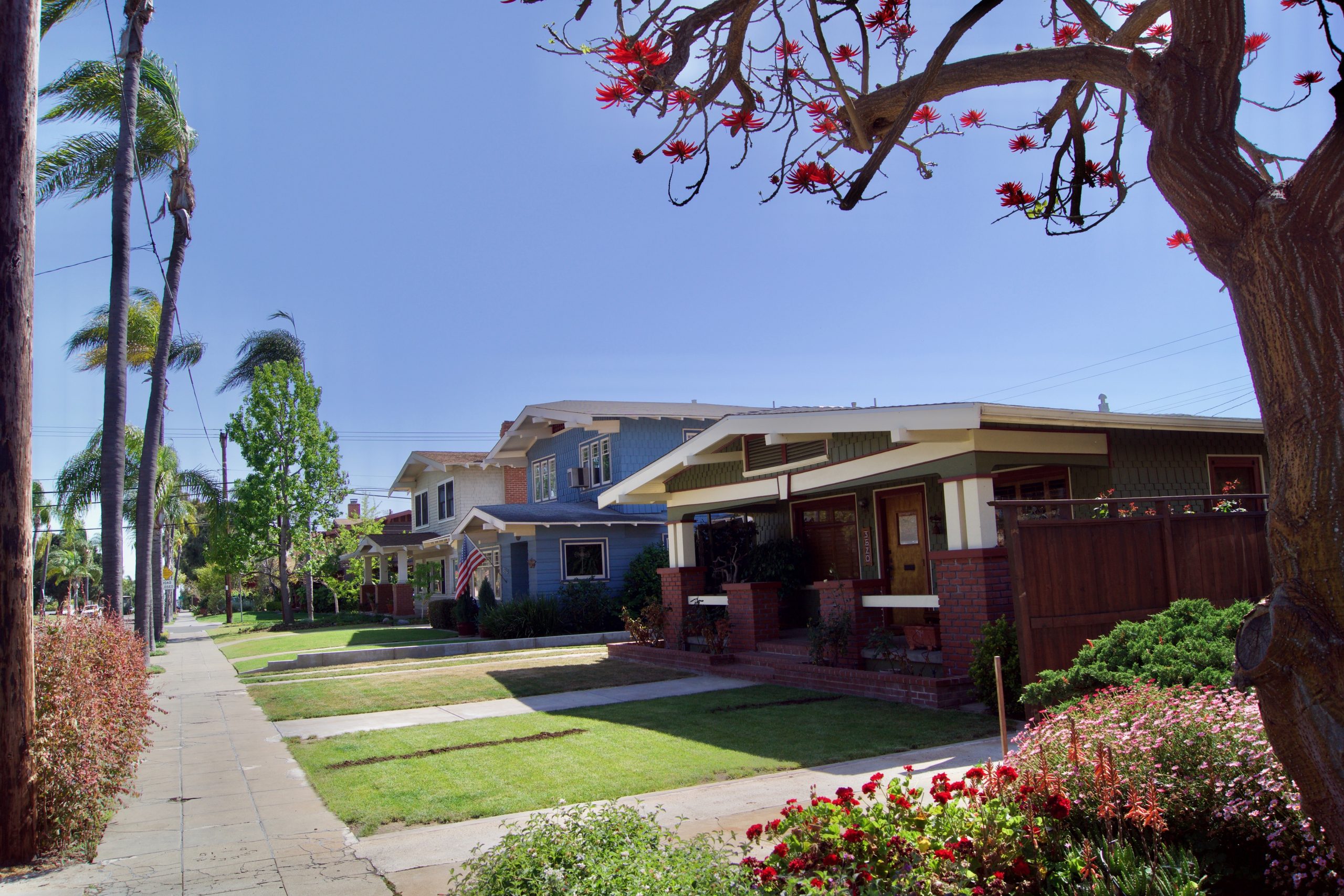
California has always been one of the most complex real estate markets in the country — high values, strong demand, constrained supply, and a regulatory environment unlike any other state’s. In 2026, that complexity is sharpened by a fresh rate shock and a set of property-type stories that have genuinely diverged from each other. At LBC Capital, here’s what we’re watching closely, and why it’s shaping where we’re actually putting capital to work.
The Residential Market: Supply Constraint, Persistent Demand
California’s housing market remains structurally undersupplied — the state has permitted far fewer units per capita than population growth requires for decades, and the 2022–2023 rate spike slowed new starts further. In 2026, inventory stays tight across Los Angeles, San Diego, the Bay Area, and Sacramento, and affordability remains strained relative to median incomes. For fix-and-flip lenders, that combination still supports solid retail demand for renovated inventory — the assumption underneath most ARV-based underwriting. But that underwriting assumption is exactly where this year’s rate move matters most, which is the next thing worth being precise about.
The Rate Environment Just Got More Urgent
This is worth updating in real time rather than describing in generalities: as of early October 2026, the 30-year conventional mortgage rate has climbed to roughly 7.3–7.5%, its highest level since 2023, as the 10-year Treasury yield pushed above 5.2%. That’s a sharper move than a comfortable “well below the 2023 peak” framing would suggest — rates are now testing that peak territory again, not settling well under it. For our bridge loan borrowers, this directly affects refinance exit viability: a permanent-financing assumption built even a few months ago may already be stale. We underwrite exits conservatively as a matter of policy — assuming today’s market rate, not an optimistic projection — and this is exactly the kind of move that validates why, consistent with what we’ve laid out in our recession-vs-rate-spike analysis.
Multifamily: Still the Bright Spot, With Real Numbers Behind It
California multifamily remains one of the more compelling private bridge lending categories in the country. Rental demand stays strong — high home prices keep would-be buyers renting, migration patterns hold population in coastal metros, and new supply stays constrained by high construction costs and permitting timelines. The numbers back this up directly: Los Angeles multifamily vacancy sat around 5.6% in early 2026, and San Diego ran close behind at roughly 5.4% — both comfortably inside a healthy range rather than the distressed territory other property types are dealing with. Bridge loans on value-add multifamily — acquiring and repositioning older rental stock — remain a core part of our California lending thesis for exactly this reason.
Office: Genuinely Improving, Still Not Where We’re Lending
San Francisco office vacancy peaked above 36% in late 2024 — a real structural shock — but the more current picture deserves equal weight: CBRE data puts vacancy closer to 29% by mid-2026, a meaningful decline driven almost entirely by AI-sector leasing absorbing space at a pace few predicted. That’s a genuine turnaround worth acknowledging rather than ignoring. It doesn’t change our underwriting stance, though — refinance-into-permanent-financing is still difficult at today’s elevated vacancy and today’s rate environment, and exit liquidity in office sales remains thin outside a narrow set of trophy or AI-leased assets. We’ve substantially reduced our office exposure and aren’t actively originating new office loans in California right now, even while watching the AI-driven recovery with interest.
Retail: Bifurcated and Location-Dependent, As Usual
California retail isn’t one market. Grocery-anchored strip centers and necessity retail in dense suburban submarkets have stayed stable straight through the post-COVID years, and luxury high-street corridors like Rodeo Drive and Santa Monica’s Third Street Promenade have shown real recovery. Unanchored, secondary-location strip retail with elevated vacancy remains difficult collateral by comparison. Our retail exposure stays selective as a result: grocery-anchored or necessity-retail tenants in strong-demographic locations, with real occupancy history and lease terms running past loan maturity — the same property-type discipline we laid out in our broader look at property type risk across the portfolio.
CEQA and Entitlement Risk: Narrower Than It Used To Be, Not Gone
California’s regulatory environment still adds a layer of risk to construction and development lending that most other states don’t carry. Historically, the California Environmental Quality Act could extend entitlement timelines by 18 to 36 months for projects facing organized opposition, and that risk hasn’t disappeared. But it’s worth being current here: 2025’s AB 130 and SB 131 reforms created genuine streamlined exemptions for qualifying infill housing projects — smaller residential and mixed-use sites, meeting specific density and zoning criteria, in already-developed areas. For projects that qualify, entitlement risk is meaningfully narrower than it was two years ago. For everything outside that lane — larger developments, non-infill sites, most commercial projects — the fuller CEQA timeline still applies, and we underwrite construction loans with conservative contingency budgets, extended interest reserves, and a strong preference for borrowers with a demonstrated track record navigating California’s entitlement process either way.
Where We See Opportunity in 2026
LBC Capital’s California focus for the rest of 2026 concentrates on three areas: residential fix-and-flip in established suburban markets — the Inland Empire, parts of the San Fernando Valley, San Diego County — where renovation-to-sale timelines stay predictable; multifamily value-add bridge loans in mid-density Los Angeles and San Diego submarkets, where the vacancy numbers above support durable rental demand; and selective industrial and logistics bridge lending in the Inland Empire, where the supply-chain-driven collateral thesis still holds, though not uniformly — Inland Empire industrial vacancy sat around 7.4% in the second quarter of 2026, down from 7.8% the quarter before, with a real split between a tighter western submarket near 6% and a softer eastern submarket closer to 9%. That’s a market worth being in, selectively, not a blanket recovery story. We’re avoiding speculative ground-up construction, office collateral, and secondary-market retail — putting capital where our underwriting discipline does the most good.
Frequently Asked Questions
Has the recent mortgage rate increase changed how LBC Capital underwrites bridge loans?
It reinforces an approach already in place rather than requiring a new one. Exit strategies are underwritten against current market rates, not optimistic future projections, specifically so a move like October 2026’s rate spike doesn’t catch a loan’s refinance assumptions off guard.
Is San Francisco office actually recovering, or still a risk?
Both, genuinely. Vacancy has declined meaningfully from its 2024 peak thanks to AI-sector leasing, which is a real and significant shift. It hasn’t yet translated into the kind of broad refinance and sale liquidity that would change our lending posture, so we’re watching the trend closely without originating new office loans yet.
Does the 2025 CEQA reform mean entitlement risk is no longer a factor in California construction lending?
No — it narrows the risk for a specific category of project, not all of them. Smaller infill residential and mixed-use developments that meet the new exemption criteria move faster than before. Larger, non-infill, and most commercial projects still face the fuller entitlement timeline, which is why conservative contingency planning stays standard in our construction underwriting regardless of the reform.
Latest posts
Blog page
The Accredited Investor’s Guide to Reading a Private Placement Memorandum (PPM)
A Private Placement Memorandum can run 80 to 150 pages, and no one reads every word with equal care. That’s fine — but a handful of sections carry real legal and financial weight, and skipping them means taking on risk you never actually agreed to understand. This guide points to exactly where to focus, what […]

California Foreclosure Law Explained: What It Means for Private Real Estate Lenders
California’s foreclosure law is one of the most significant protections in a private lender’s toolkit — and one of the least understood by investors. The state’s non-judicial foreclosure process gives first-lien lenders a comparatively fast, cost-effective path to collateral recovery when a borrower defaults. For anyone invested in a California-focused fund like LBC Capital, understanding […]