
Property Type Risk in Private Lending
A private real estate loan is only as good as its collateral, and “collateral” is doing a lot of work in that sentence. A first-lien loan at 65% LTV sounds conservative on its face — but 65% LTV on a stabilized multifamily building in Los Angeles is a fundamentally different risk than 65% LTV on a vacant office tower in San Francisco. Property type drives demand stability, how quickly a lender could sell the asset if it had to, income reliability, and how exposed a loan is to structural shifts in how a sector is used. Investors in private lending funds should understand how property type shapes risk — and ask which types their fund actually holds.
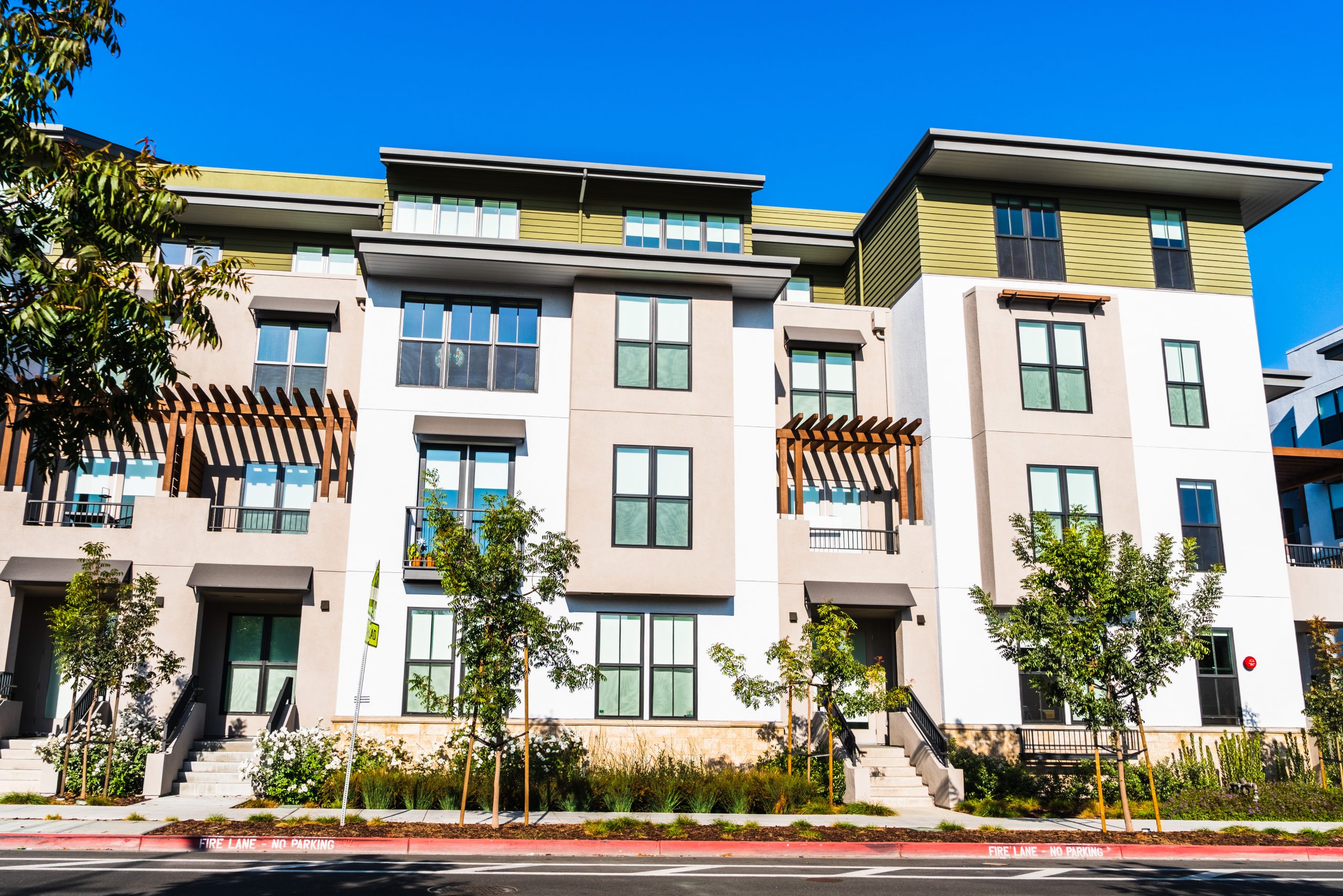
Multifamily: The Benchmark for Safety
Apartment buildings with five or more units are the collateral private lenders most commonly favor, for good reason: demand is durable (people always need housing), the buyer pool at sale spans owner-users, investors, and institutions, and government-backed agency programs through Fannie Mae and Freddie Mac provide a deep, reliable exit for stabilized assets. Multiple tenants also mean diversified income — a 20-unit building losing one tenant loses 5% of income, where a single-tenant retail building losing its tenant loses all of it. NCREIF’s property-type return data consistently shows multifamily among the more resilient categories through downturns, which is part of why it anchors so many private lending portfolios.
Single-Family Residential: High Liquidity, Concentrated Risk
Single-family homes and small 2–4 unit properties offer exceptional liquidity at sale — owner-occupied buyers are the largest buyer pool in any housing market, which makes this collateral attractive for bridge lending. The trade-off is concentration: one tenant, one income source. If that source disappears, so does 100% of the property’s income. Fix-and-flip bridge loans on single-family properties are common and generally sound when underwritten conservatively, with renovation quality and the accuracy of the after-repair value estimate doing most of the real underwriting work.
Industrial: A Strong Performer, With a Recent Wrinkle
Industrial — warehouses, distribution centers, light manufacturing — has been one of the better-performing commercial property types over the past decade, powered by e-commerce logistics demand, long leases, and institutional tenants. That said, the sector isn’t the uninterrupted story it was in 2021–2022. A wave of pandemic-era construction pushed national industrial vacancy up sharply — from roughly 3% in big-box product in 2022 to peaks near 8–10% by 2025 — as new supply outran demand. CBRE’s mid-2026 data shows vacancy has started compressing again, falling to around 6.5%, but the recovery is uneven: large-format big-box space is still working through excess supply, while small-bay and infill industrial has stayed tight throughout, rarely breaking 5% vacancy. Tenant quality and lease duration still matter most for underwriting, but so now does size and format — not every industrial asset weathered the last three years the same way.
Retail: A Bifurcated Market
Retail isn’t one category. Grocery-anchored and necessity retail — the kind selling things people need regardless of the economy — has performed well. Unanchored discretionary retail, from apparel to home goods, keeps facing e-commerce headwinds. Class A high-street retail in dense urban cores remains viable; Class B suburban strip malls with high vacancy are genuinely hard to underwrite. A private lender touching retail needs to be specific about subtype and tenant mix — blanket avoidance misses real opportunities, and blanket acceptance misses real risk.
Office: The Cautionary Category, With a Real Caveat
Office has seen the most significant structural demand shift of any property type, and San Francisco is the clearest example: vacancy climbed to a record 36.9% by Q3 2024 as remote and hybrid work permanently reduced utilization. What’s changed since is worth knowing — CBRE’s Q2 2026 figures show San Francisco vacancy down to 29.2%, the sharpest improvement of any major U.S. market, driven almost entirely by AI companies absorbing large blocks of prime, turnkey space. That recovery is real but narrow — concentrated in high-quality buildings and specific submarkets, not a broad-based comeback for office generally. Older, lower-quality stock in most markets remains structurally impaired. A private lender considering office collateral still needs unusually high scrutiny on current occupancy, lease expirations, and whether the building can actually compete for the tenants driving demand today. Most disciplined private lenders, LBC Capital included, significantly reduced or eliminated office exposure after 2020 and have stayed selective since — the recent bifurcation is a reason for more precision, not a reason to relax.
Construction and Land: The Highest-Risk Category
Raw land and early-stage construction sit at the top of the risk scale in private lending. Land has no income stream of its own — repayment depends entirely on a future sale or completed construction. Construction loans disburse in stages and carry real completion risk: what happens if the borrower runs out of money mid-project? Lenders financing construction need genuine expertise in cost estimation, construction management, and the local regulatory environment; loan-to-cost ratios typically cap around 75–80% of total project costs. Without that expertise on the lending side, construction is where the worst losses in private lending tend to occur.
Building a Property-Type Policy for Risk Management
Disciplined private lending funds write explicit investment guidelines defining which property types they’ll lend on and at what maximum LTV for each — for illustration, a typical policy might cap multifamily at 75% LTV, single-family at 70% of ARV, industrial at 70% LTV, grocery-anchored retail only at 65% LTV, and exclude office and raw land entirely. The specific numbers vary fund to fund, but the discipline of having them at all — and following them — is what separates a real risk policy from marketing language. This is exactly the kind of detail a fund’s loan committee process should be enforcing on every deal, not just referencing in a pitch deck.
What This Means for Fund Investors
When evaluating a private lending fund, ask for the property-type breakdown of the current portfolio and compare it against the fund’s own stated guidelines. Drift between stated policy and actual holdings — a fund that says it avoids office but has crept into a few deals, or one that’s quietly concentrated in a single property type — is a real risk signal, arguably more informative than the headline LTV or yield. LBC Capital’s own focus on industrial and other income-producing property types in high-demand markets reflects the same underlying logic every investor should be applying to any fund: collateral quality isn’t a footnote to the loan terms, it’s most of the risk.
Frequently Asked Questions
Why do private lenders generally prefer multifamily collateral?
Multifamily combines stable, diversified income (multiple tenants rather than one), a deep buyer pool at resale, and strong government-backed exit financing through Fannie Mae and Freddie Mac. Losing one tenant in a 20-unit building costs 5% of income, not 100%, which makes multifamily more forgiving to underwrite than single-tenant property types.
Is office real estate too risky for private lenders to touch at all?
Not universally, but it requires much more scrutiny than it used to. Office vacancy remains historically elevated in most markets even after recent improvement, and the recovery that has occurred is concentrated in high-quality buildings in specific submarkets rather than the sector broadly. Current occupancy, lease expirations, and whether a building can compete for today’s tenants matter more than the property type label itself.
What makes construction and land loans riskier than other property types?
Neither has an existing income stream to underwrite against — repayment depends entirely on a future event, either a completed sale or finished construction. Construction loans add completion risk on top of that, since funds disburse in stages and a borrower running out of money mid-project can leave a lender holding a half-built asset with no income and uncertain resale value.
Latest posts
Blog page
Real Estate Debt vs. the Stock Market: Why Income Stability Is Worth More Than It Looks
When stocks are up 20% for the year, a 9–10% fixed income return from private real estate debt looks almost boring by comparison. That comparison is also incomplete. It only looks at where each investment ends up, not the ride it took to get there — and for anyone actually living off their portfolio, the […]

How Private Lenders Use Title Insurance to Protect Investor Capital
Before a private lender sends a single dollar to closing, one question has to be answered with certainty: does the borrower actually own this property free of hidden claims? Title insurance is what backs up the answer — and it puts real money behind that guarantee if something turns out to be wrong. For anyone […]